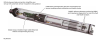
pH / redox (ORP) industrial hot-tap retractable sensor TBX557
Last updated: 21 May 2025
1044 Views

Next Step Solid State reference
- eliminates poisoning, pumping and plugging
Operating temperatures up to 140 °C (284 °F)
- the highest glass temperature limit on the market
Operating pressures up to 21 bar (300 psi) and higher
- the highest pressure limit on the market
Durable electrodes
- The TB(X)5 electrode design eliminates failures due to thermal stress caused by rapid temperature excursions. Unlike other sensors that use a large inner air bubble for expansion absorption, TB(X)5 electrodes use a unique inner plunger; providing more effective protection against temperature fluctuations.
The electrodes are available in several measuring element types ensuring greatest process optimization
Related Content

EZLink™ connectivity
• Plug-and-play technology makes sensor integration fast and easy
• Advanced diagnostics providing end-of-life indication and fault
analysis
• Improved measurement accuracy with digital communication

DescriptionDisinfection is a key process found in many applications that is designed to kill or inactivate pathogenic microorganisms. This is especially important in the treatment of potable water due to the health effects of consuming unsafe drinking water. This webinar gives a background on the usage of chlorine in water disinfection, the pros/cons of this method of disinfection, methods that can be used for chlorination, and details on the measurement techniques used for monitoring chlorine residual in water. Topics include:
- History of disinfection
- Applications of Chlorine Measurement
- Electrochemical Measurement of Chlorine
